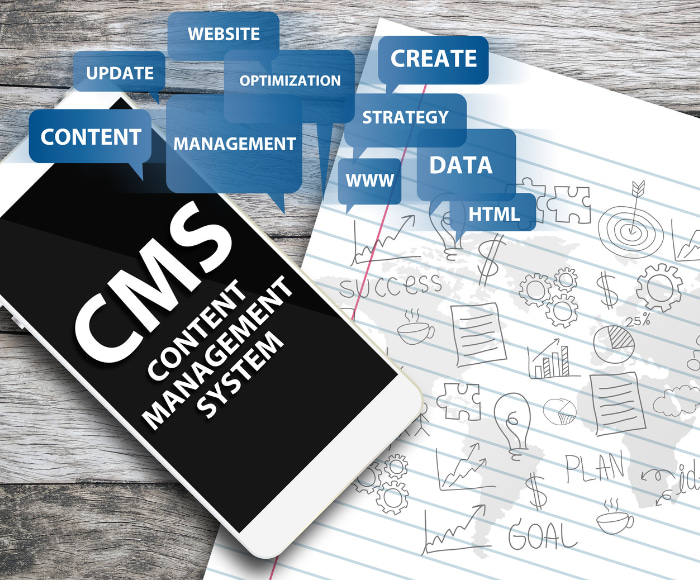
A web content management system is a platform that permits both large and small organizations to handle various types of digital information on their website. It allows organizations to create and manage dynamic content without any knowledge of programming or mark-up languages. It also helps businesses make informed decisions (for example; which page got more visits) based on insights delivered through the platform.
With the help of a web content management system (WCM), any organization can maintain and control the content on a website. The stored content in a central database is recalled internally by the CMS without needing the administrator to write any code, by using its own features written in different programming or markup languages for example; XML or. NET. Anyone can access the web page with the help of a web browser. The content can be edited via a web browser-based control panel that not only controls the content, but also the layout and various elements of a web page.
A web content management system has two parts:
Organizations can run WCMSs on the cloud or use open source hosting platforms such as the LAMP or WAMP stack to host their own setups.
When it comes to promoting a business, websites play an important role in marketing. In fact, modern business depends heavily on websites as it is an important marketing tool for creating inbound interest. The most difficult part of maintaining a website is the constant updates needed for its content. This can’t be done efficiently on a manual basis, that is why the need for a web content management system is unavoidable.
If we look at the different digital marketing activities, for example, social media, email marketing, print, and other modes of advertisement and promotion, they all route users to the website of the company. Therefore, it is vital for any company to keep its website current for an effective online presence. Well, a web content management system not only plays a role in enabling the creation of a variety of content but also provides capabilities for deploying e-commerce websites or online stores.
With a Web CMS, It becomes easy for organizations to maintain the consistency of their online presence across multiple platforms (like web and mobile) as a web content management system offers numerous tools within itself. There are different control options available for users so that they can maintain different versions, and automate processes and activities.
Below are the few main features of a web content management system:
Let’s have a look at some key advantages of a WCM –
Cost-effective: Some of the Web Content Management System (WCMS) platforms available are free or come at a very low cost, with the cost of management and support being the only overheads. Hence, most small or medium-sized companies can afford them.
Ease to use: Most WCMS tools are user-friendly and people with minimal or zero coding experience can also configure and manage them.
Customizable: The tool (WCMS) comes with easily customizable front ends.
To classify web content management systems (CMS), we can put them into three main buckets
It works on the mechanism of deploying online templates that have an instant impact on the web page on a real-time basis. Whenever the changes are made, the update is published instantly on the live web page.
In offline processing, the content is created in an offline mode in CMS, where the users are not connected to the internet. This method allows complete due diligence of the content before it is published to the live server for users.
Here, users use a combination of online and offline modes, through the usage of tools such as JSP, ASP, or PHP, instead of the traditional HTML.
Web content management system (WCMS) is here to stay and there is constant evolution happening in this segment. Today we can find many open source, free platforms that help companies in delivering and managing their content. You never know, the next revolution in WCMS might be around the corner.
Speak with our experts enquiry@paramountsoft.net